


Today, SMBs are demanding measurable business outcomes: greater efficiency, stronger security, improved customer experiences and smarter ways to scale, relying on MSPs in the process.
That shift in demand is creating a significant opportunity for channel partners. According to analyst firm Omdia, the SMB market makes up nearly 40% of total IT spend (US$2.38 trillion), which is projected to grow 6.3% this year. In APAC, 81% of that spend will be delivered by partners.
This opportunity will be unpacked during TechX, register here.
Across Australia and New Zealand, MSPs are seeing a common trend emerge. Customers are embracing AI, automation and modern managed services, but they are also discovering that successful adoption requires strong foundations around security, governance, compliance and operational readiness.
From boutique managed service providers to large enterprise-focused consultancies, partners say the smartest growth opportunities lie at the intersection of innovation and practical business outcomes.
Relationships Matter
For Christchurch-based Zeal Consultants, trust remains the foundation of growth in an increasingly complex technology landscape.Celebrating 11 years in business, the nine-person MSP has built its reputation on a highly personalised approach, giving customers direct access to engineers rather than funneling support through a traditional service desk. “We’ve always positioned ourselves a little bit differently in the market,” says Zeal Consultants Managing Director Mike Walker.
That customer-first culture has helped Zeal maintain relationships spanning more than two decades, with some clients following the team through multiple business ventures. “The key metric in this business is not making money; it never has been,” Walker says. “The key metric is client satisfaction. If people are happy, we’re happy.”
While customer relationships remain critical, the technology conversations themselves have evolved dramatically over the past 12 months. According to Walker, AI has become one of the biggest catalysts for customer engagement, but not necessarily for the reasons many expected.
“Everyone is coming to us thinking AI is going to solve all the world’s problems,” he says. “Our response is: AI is great, but have you considered the security implications?”
That question is opening new opportunities around security assessments, governance frameworks and AI readiness programs. At the same time, cyber insurance requirements and growing awareness of security incidents across Australia and New Zealand are driving customers to accelerate investments they had previously delayed.
“The insurance companies are becoming the final push,” Walker explains. “A lot of organisations knew they needed to do the work, but when insurers start saying they’re not going to provide coverage, it drives action.”
AI Beyond The Hype
For Sydney-based Tecala, customer interest in AI is creating a broader opportunity for automation and digital transformation. CRO Dom Garfi believes AI has effectively given automation a new identity, creating fresh demand for strategic advice and implementation support. “AI has put a renewed focus and renewed label against automation,” Garfi says.Over the past year, many organisations have experimented with tools such as Microsoft Copilot, Claude, and other generative AI platforms. However, Garfi says customers are now entering a more mature phase of adoption. “I think clients have spent the last financial year building up their knowledge base and awareness around what the capabilities are,” he says.
The challenge is that many organisations are discovering their data, governance and compliance frameworks are not yet ready for large-scale AI deployment. “Boards are saying, ‘We need AI’,” Garfi explains. “The IT teams are coming back and saying, ‘Our data isn’t ready. We need to improve our maturity first.’”
This is creating valuable consulting opportunities for partners capable of guiding customers through discovery workshops, governance programs, data readiness assessments and security reviews.
Garfi says many early adopters are now reaching a point where AI-powered applications developed by individual employees are becoming mission-critical business tools. “They’ve built something amazing for themselves,” he says. “Now they need to operationalise it, secure and support it.”
As a result, managed services are evolving beyond traditional infrastructure support into broader operational management for AI-driven environments.
Security Spotlight
While AI dominates headlines, security continues to underpin almost every customer’s conversation.Liquid IT Director of Strategy and Client Engagement Daryl Isaac says security-led managed services remain one of the strongest growth areas in the New Zealand market. “We’re seeing conversations move from product-based discussions to outcome-based discussions,” Isaac says.
Rather than asking for specific security tools, customers are increasingly focused on outcomes such as vulnerability reduction, continuous monitoring and compliance with readiness.
Government agencies, local councils and commercial organisations alike are responding to growing regulatory pressure, cyber threats and guidance from national cybersecurity authorities. At the same time, organisations are becoming more conscious of AI governance risks.
“A lot of organisations are still coming to terms with what they actually need to do,” Isaac says. “The conversation is still very much around putting the guardrails in place.” That includes establishing data controls, access management policies and security frameworks before introducing AI solutions into production environments.
Isaac also points to growing interest in operational technology (OT) security and co-managed services, where internal IT teams work alongside external providers to access specialist expertise while maintaining cost control.
Cost Savings To Outcomes
For Australian technology supplier TechFlow IT Services, customer priorities have changed significantly in the past year.Director Shah Hardik says technology conversations have shifted from pure cost control towards business enablement. “Twelve months ago, the conversations were about how we can save money,” Hardik says. “Now it’s more about what can we achieve, and what do we need to achieve those things?”
AI-driven workplace modernisation projects are contributing strongly to growth, including demand for AI-ready devices, modern infrastructure and new data centre capabilities. Hardik is also seeing organisations re-evaluate the economics of cloud-based AI consumption.
Many customers that initially embraced cloud AI services without hesitation are now scrutinising token usage costs and exploring alternative deployment models. “We’re seeing customers look at local AI infrastructure, GPU farms and private AI environments,” he says.
This trend mirrors broader cloud market evolution, where organisations are increasingly seeking the right balance between public cloud flexibility and operational cost control.
For partners, these conversations are generating opportunities across infrastructure, consulting, procurement and ongoing support services.
Powerful Partnerships
While each partner operates in different segments of the market, one theme emerged consistently throughout every conversation: the value of strong ecosystem partnerships.Whether it’s helping a 9-person MSP compete against larger rivals or providing access to specialist expertise, Dicker Data continues to play an important role in enabling partner growth.
- For Zeal, Dicker Data helps the business compete in larger opportunities by providing access to technical vendor experts and strategic resources. “They make us look bigger than we are,” says Walker.
- Tecala views Dicker Data as a strategic enabler within its Microsoft ecosystem, supporting everything from pre-sales and marketing to customer engagement, Garfi said.
- Liquid IT relies on Dicker Data for vendor access, enablement, proof-of-concept support and technical expertise.
- Meanwhile, TechFlow leverages Dicker Data’s specialist knowledge, services and relationships to respond rapidly to customer requirements in an increasingly dynamic market.
The Smart Shift
As AI has continued to dominate customer conversations throughout the past 12 months, the next year will be defined by execution.Across the board, solution providers are investing in security-led managed services, AI readiness and governance, automation consulting, data management and compliance, while exploring emerging opportunities in operational technology (OT) security, sovereign cloud and private AI infrastructure.
For Zeal Consultants, growth will come from expanding beyond its traditional footprint while maintaining the personalised service model that has underpinned the business for more than a decade. “We want to double our size,” says Walker.
The challenge, he explains, is doing so without sacrificing the close-knit culture and accountability that customers value. Zeal plans to leverage partners such as Dicker Data to access new markets and larger opportunities while maintaining its boutique service approach. “We want to grow and double our size quite quickly, start playing in places where we’re not playing in, using people like Dicker to enable us to do that,” Walker says.
As customers move beyond pilots and proof-of-concepts, they’re increasingly seeking trusted partners to secure, manage and scale AI-powered environments, which is creating new recurring revenue streams and higher-value advisory opportunities for the channel.
For Tecala, the focus is firmly on converting AI education into customer investment. Garfi believes FY27 will be the year many organisations move beyond experimentation and begin funding large-scale AI and automation initiatives. “We’ve spent the last 12 months educating the market around AI and automation,” he says. “We’re banking on customers taking that knowledge and turning it into investment.”
The company is particularly focused on three growth areas: AI and automation services; data security and AI governance; and expanded managed services supporting AI-powered applications.
As more organisations operationalise the AI tools they’ve built over the past year, Garfi expects demand for ongoing support, security and governance services to accelerate. “Customers are looking at their partners and say, ‘Actually, now we need your support,'” he said.
Helping customers operationalise, secure and scale AI initiatives while building the infrastructure, governance and services required to support them, were some of the common emerging themes.
At Liquid IT, security continues to dominate investment priorities. Isaac says the business sees significant growth opportunities in security-led managed services; security enhancements within Microsoft environments; operational technology (OT) security; and AI readiness and governance consulting.
While many organisations are still determining their long-term AI strategies, they are actively investing in the foundations required to adopt the technology safely. “The key theme for me is really just guardrails,” Isaac says. “People are still concerned from a security point of view.”
OT security is also emerging as a significant opportunity, particularly within local government and critical infrastructure environments, Isaac noted.
While AI-ready PCs and workplace modernisation projects have delivered strong growth over the past year, Techflow’s Hardik believes the next wave will be driven by private AI infrastructure and data centre-based deployments.
“We are seeing many customers now talking about setting up NVIDIA farms, GPU farms and local AI environments because they don’t want to rely entirely on public AI models,” he says.
Rather than simply consuming AI services, organisations are beginning to examine the cost, performance and governance implications of large-scale AI deployments. As a result, TechFlow is exploring opportunities around AI infrastructure, private inferencing environments and AI-focused consulting services, Hardik said.
The Bottom Line
As organisations across Australia and New Zealand race to unlock the potential of AI, automation and modern managed services, the opportunity for channel partners has never been greater. The winners will be those that combine trusted relationships, deep expertise and the right ecosystem support to turn technology ambition into business value.
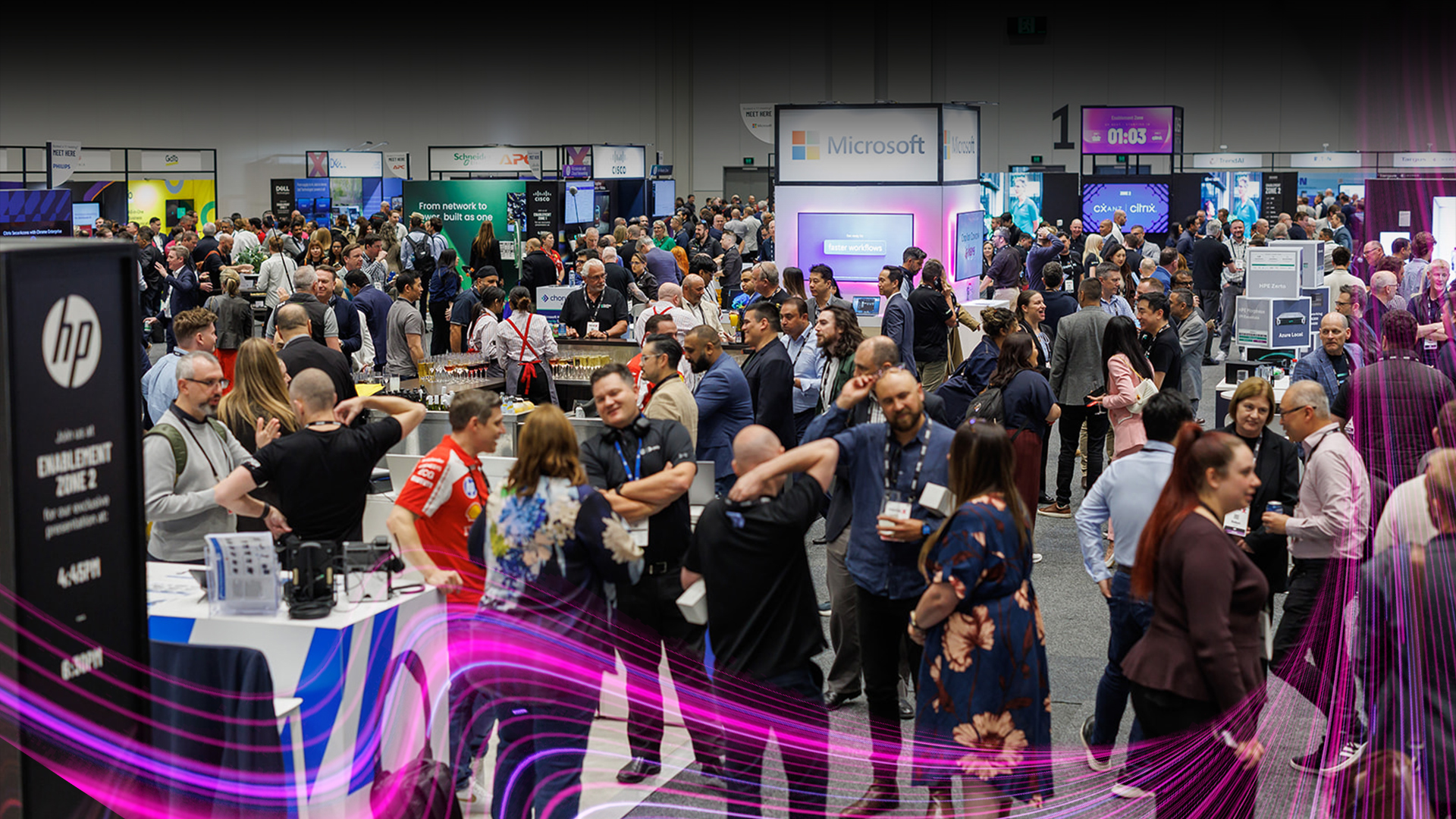
Register now for Dicker Data TechX 2026, which will be coming to Perth – 12 August, Brisbane – 20 August; Melbourne – 29 September; and Sydney – 15 October. Australian partners can register here.
TechX will also be coming to Auckland on 25 August. New Zealand partners can register here.
Original article: The smart shift for SMB partners – ARN
Internal AI capabilities prove a hot topic at TechX
Dicker Data Agrees to Acquire Sektor Group

Meet the Team: Meenakshi Jaglan (MJ)
Partner With Us
Our resellers outperform the competition and deliver next-level solutions for clients thanks to our unique, value-added services.
You May Also Like
These Related Stories

Maximising Government Incentives: A Guide for Australian SMBs

How Microsoft Express Install Bundles Solve Small Meeting Room Challenges