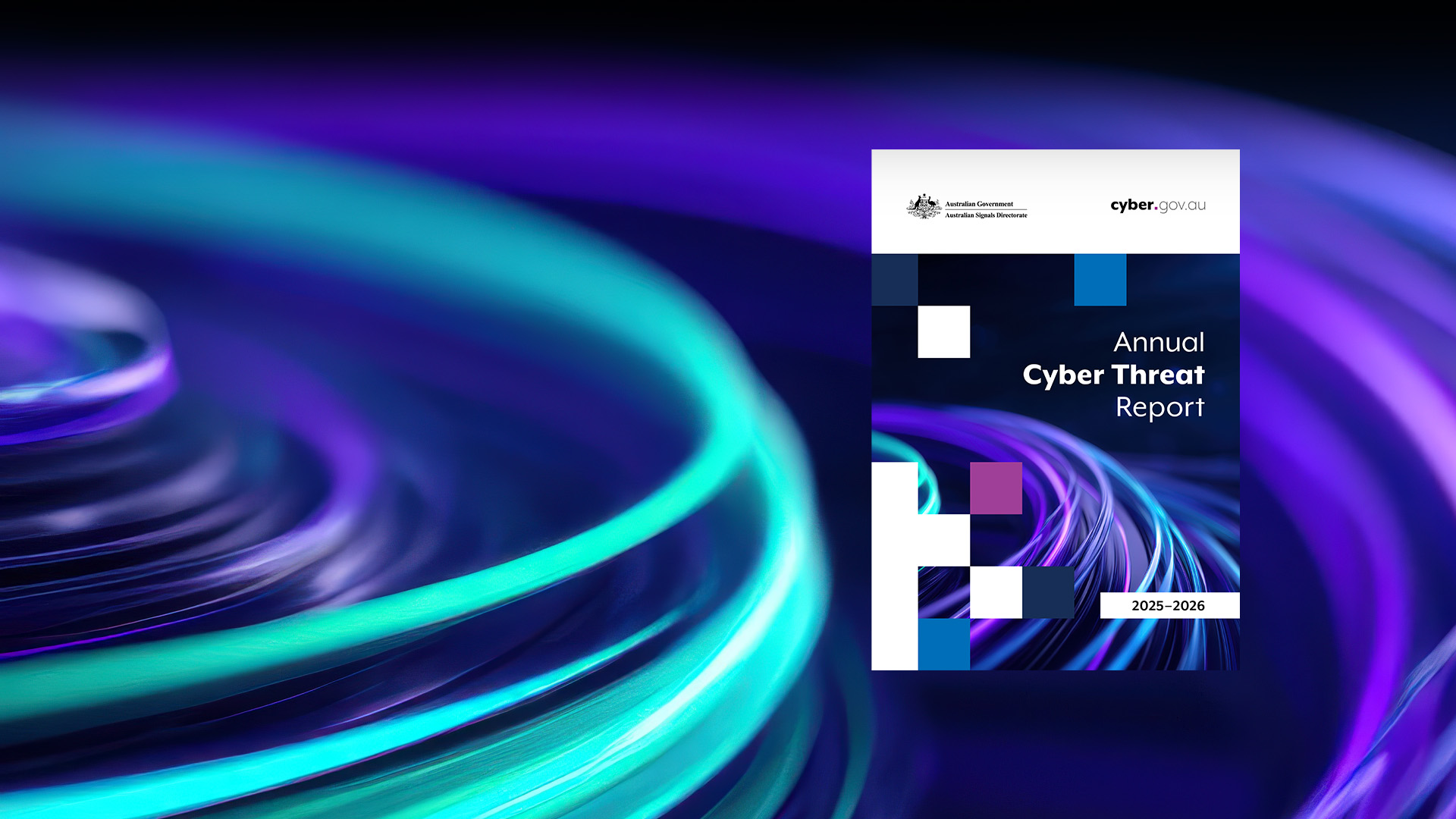
The latest ACSC Annual Cyber Threat Report 2025-26 highlights a cyber threat landscape that is becoming more frequent, more sophisticated and increasingly influenced by artificial intelligence. ASD’s ACSC responded to more than 1,500 cyber security incidents, up 20% year on year. The average self-reported cost of cybercrime for businesses reached $93,500, up 16%. For small businesses, the average cost remained significant at $55,400, while medium businesses saw the sharpest increase, rising 45% to $141,300.
These figures point to three clear priorities for Australian businesses: strengthening cyber resilience, securing digital identities, and establishing the governance required for safe AI adoption. For technology partners, they also highlight a growing opportunity to help customers move beyond traditional security tools and build long-term business resilience.
Key Findings from the ACSC Annual Cyber Threat Report 2025-26
- Cyber security incidents handled by the ACSC increased by 20% year-on-year.
- Notifications of malicious cyber activity increased by almost 80%.
- Average self-reported cost of cybercrime per business $93,500 up 16%.
- Small businesses: Average cost per cybercrime report remained significant at $55,400.
- Medium businesses: Average cost per cybercrime report jumped by 45% to $141,300.
- Phishing remained the most observed cyber-attack technique.
- AI is accelerating both cyber threats and cyber defence capabilities.
- Identity and credential compromise continue to be one of the most common pathways into organisational environments.
While the threat landscape continues to evolve, we've identified four key areas where partners can help customers strengthen security and build resilience.
1. AI Is Accelerating Both Threats and Defence
The Australian Cyber Security Centre received more than 82,000 cybercrime reports in 2025-26, equivalent to approximately one report every six minutes. The report also warns that AI is making cyberattacks, scams and phishing attempts more efficient, effective and convincing, increasing both the scale and sophistication of existing threats.
The security conversation around AI therefore needs to run in two directions: protecting customers from AI-enabled threats while also exploring how AI can strengthen a business's own cyber defences.
This trend is reflected across the industry. According to Cisco Australia and New Zealand's latest Relentless Defence Report, 37% of Australian organisations experienced an AI-enhanced cyber-attack in the past 12 months, while attackers are increasingly using frontier AI models to identify vulnerabilities and develop exploits at unprecedented speed.
"Frontier AI models are now giving threat actors the ability to identify and exploit vulnerabilities much faster than any human can. The challenge for organisations is that attackers can now operate at machine speed." – Carl Solder, CTO, Cisco Australia and New Zealand, speaking to ARN.
Ian Welch, Executive Director & CIO at Dicker Data highlighted:
"Security vulnerabilities always existed. Phishing attacks have always existed. It's now about the size and scale. AI has put it on steroids, and that's only getting faster and faster. On the flip side, it's also an opportunity for the rest of us. We can also use AI to help detect vulnerabilities, help protect, analyse log files, identify new patterns and automatically adapt our security posture."
For partners, the focus should be on strengthening cyber resilience. As threats evolve faster, organisations need improved visibility, faster response capabilities and robust recovery strategies to reduce cyber risk.
2. Identity Has Become the New Security Perimeter
Identity-based attacks continue to be one of the most common ways organisations are compromised. As AI-generated phishing attacks become increasingly sophisticated, businesses need to rethink how they educate users (their employees) and secure access to critical systems and data.
The ASD's latest Annual Cyber Threat Report reinforces this trend, noting that compromised accounts and credentials have become one of the most frequently reported incident categories across government, industry and critical infrastructure sectors. The report also found that phishing remained the most observed initial access technique, appearing in 39% of incidents.
"We've always got to remember that it's the employee between the keyboard and the seat that's the most vulnerable part of our organisation. AI has made a lot of the phishing scams a commodity now. The idea that my staff are just going to look at an email and notice that the logo is a little bit out of place, those days are gone. The phishing attack is perfect. The replica website looks identical." – Ian Welch, Executive Director & CIO, Dicker Data.
For organisations, this reinforces the need to address both technology and human behaviour as part of a broader cyber resilience strategy.
"The Office of the Australian Information Commissioner reporting that human error accounted for 37% of notifiable data breaches in January to June 2025. Partners can help customers reduce risk by strengthening identity security while ensuring they have the resilience and recovery capabilities needed when attacks inevitably occur." - Neil Martin, Business Development Manager, Dicker Data.
As phishing and credential-based attacks become more convincing, customers need layered protection across identity, access and people. This creates an opportunity for partners to have broader cyber resilience conversations, helping customers reduce risk and strengthen security outcomes, with Dicker Data supporting partners through leading security vendors, technical expertise and modern security frameworks.
3. Partners should look beyond the customer’s perimeter
Cyber risk no longer stops at the edge of a customer's network. As organisations become more interconnected across cloud platforms, applications, suppliers and third-party services, their attack surface and dependencies continue to grow.
The Australian Signals Directorate's latest cyber threat report highlights this shift, finding that 56% of incidents involved internet-facing systems as the initial access vector. The Australian Cyber Security Centre also identifies managing supply-chain and third-party risk, alongside selecting Secure by Design products and services, as important steps organisations can take to strengthen cyber resilience.
"The customer's perimeter goes beyond securing your own internal environment. Cloud computing and hybrid work environments have altered fixed-boundary networking and security to securing remote, dynamically moving environments across staff, identities, non-human identities and access to sensitive corporate data." - Chris Georgiou, Business Manager, Dicker Data.
As organisations become more interconnected, security can no longer be treated as a series of isolated controls. Partners have an opportunity to guide customers towards a more connected approach, ensuring security is embedded across users, applications, data and third-party relationships from the outset.
4. The Window to respond is getting smaller
Cybersecurity has always required organisations to keep pace with emerging vulnerabilities, but that window is continuing to tighten. The Australian Cyber Security Centre warns that the gap between vulnerability disclosure and exploitation has never been narrower, with some vulnerabilities being successfully exploited within 48 hours of a patch or mitigation being released. The report also notes that AI-enabled tools are likely to further accelerate this trend, reducing the time organisations have to detect, assess and respond to threats.
"As attacks become faster and more sophisticated, organisations need real-time visibility and the ability to respond at speed. The focus should be on accelerating detection, improving visibility and automating response, so threats can be identified and contained before they escalate into a broader business disruption." - David Vogt, Business Manager, Dicker Data.
As response windows continue to shrink, organisations need greater visibility, automation and operational readiness to stay ahead of emerging threats. This creates an opportunity for partners to move beyond technology discussions and become trusted advisors, helping customers understand their risk profile, identify resilience gaps and strengthen recovery readiness.
"A good, honest conversation about cyber risk and the potential impact of a breach is probably the starting point for everyone. For MSPs and MSSPs, there’s a huge opportunity to have those conversations with customers, because a single incident can often justify stronger security measures, greater investment and a more proactive approach to resilience."- Ian Welch, Executive Director & CIO, Dicker Data.
Learn how our Dicker Data team can support your business and customers with building cyber resiliency.
Our Dicker Data team acts as an extension of your business, helping you lead meaningful cyber resilience conversations with customers. Access cybersecurity specialists, vendor expertise, technical enablement, assessments and partner resources, to support you in shifting the discussion from technology solutions to business risk, resilience and recovery.
"The question is no longer whether an organisation will experience a cyber incident, but how prepared it is to respond and recover when one occurs. The most valuable partner conversations are those that connect cyber risk to business outcomes and resilience." – Stuart Anderson, Partner Technical Manager, Dicker Data
Want to learn more about Dicker Data's approach to cybersecurity? Ian Welch, Executive Director and Chief Information Officer, takes you behind the scenes.
Frequently Asked Questions
What is the ACSC Annual Cyber Threat Report 2025-26?
The ACSC Annual Cyber Threat Report 2025-26 is a yearly assessment of Australia's cyber security landscape, highlighting emerging threats, attack trends, vulnerabilities and areas organisations should prioritise to improve cyber resilience.
What are the biggest cyber security trends highlighted in the report?
The report identifies three major trends shaping the market:
How is AI changing the cyber security landscape?
AI is helping attackers automate phishing campaigns, identify vulnerabilities faster and increase the scale of cyber-attacks. At the same time, organisations can use AI to improve threat detection, automate security operations and analyse large volumes of security data more efficiently.
Why is identity security becoming so important?
Identity-based attacks continue to be one of the most common ways cybercriminals gain access to systems and data. Protecting user identities through technologies such as MFA, passkeys, Zero Trust and identity governance is becoming a critical component of modern cyber security strategies.
What is cyber resilience?
Cyber resilience is an organisation's ability to prevent, respond to, recover from and adapt to cyber incidents. It goes beyond traditional security controls and includes business continuity planning, incident response, backup and recovery, governance and employee awareness.
What role should partners play in cyber security?
Partners are increasingly moving beyond technology deployment and becoming strategic advisors. This includes helping customers assess risk, improve cyber maturity, establish governance frameworks, develop recovery plans and align security investments with business outcomes.
Why is AI governance important?
AI governance helps organisations manage security, privacy, compliance and data protection risks associated with AI adoption. Strong governance ensures AI technologies are used responsibly while reducing the risk of data exposure and unauthorised access.
How can partners help customers adopt AI securely?
Partners can assist customers by conducting AI readiness assessments, identifying suitable use cases, implementing governance controls, securing sensitive data, and ensuring AI solutions align with business goals and compliance requirements.
What are the most effective cyber security measures organisations can implement today?
To help strengthen security posture and reduce risk, Dicker Data recommends focusing on the following high-impact measures:
- Multi-factor authentication (MFA)
- Zero Trust security principles
- Regular patching and vulnerability management
- Security awareness training
- Data classification and governance
- Backup and recovery testing
- Incident response planning
For more information, please visit: https://www.cyber.gov.au/
How is Dicker Data helping partners navigate these challenges?
Dicker Data supports partners through a combination of cybersecurity expertise, enablement programs, vendor ecosystems and specialist practices such as AI Accelerate. Together, these resources help partners identify opportunities, strengthen customer outcomes and deliver solutions across AI, security, governance and cyber resilience. Learn more here.