How many meeting rooms in your organisation have no technology or have old technology in them? Across ANZ workplaces, meeting rooms remain one of the most underutilised technology investments and one of the biggest missed opportunities for partners.
55% organisations in APAC report that their meeting rooms are still running outdated technology. That’s not just an operational gap, it’s a scalable, repeatable opportunity to modernise collaboration environments and unlock new revenue streams.
The Shift: From Meeting Rooms To Intelligent Spaces
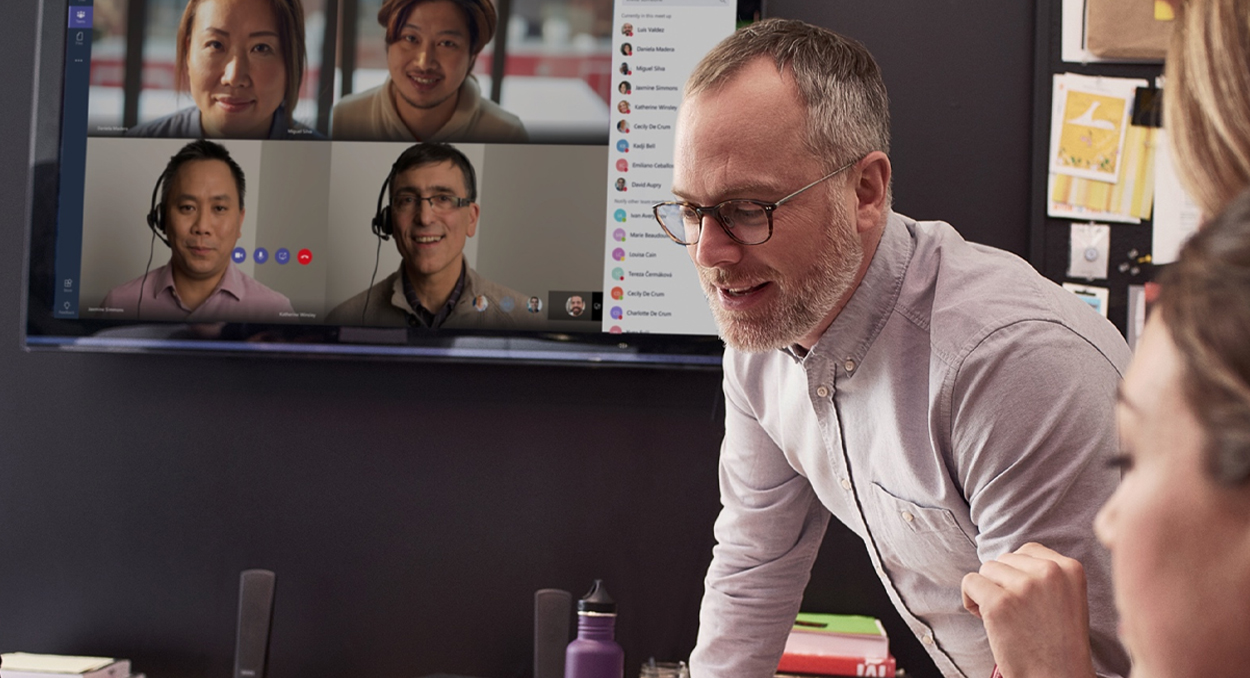
Most organisations don’t need more boardrooms, they need better small meeting spaces. The reality is that most meetings involve only a handful of participants, yet many of these spaces lack the technology to support hybrid collaboration effectively.
At the same time, user expectations have changed. Teams expect a seamless, “walk in and start” experience, regardless of room size, something that legacy setups can’t deliver.
This is where Microsoft Teams Rooms (MTR) solutions are redefining the meeting experience, turning underutilised spaces into consistent, high-quality collaboration environments.
Why AI Is Accelerating The Opportunity
The rise of AI in the workplace is shifting the role of the meeting room entirely.
With capabilities like real-time transcription, intelligent summarisation, and language translation, meeting spaces are evolving into environments that actively contribute to productivity, not just host conversations.
This is the critical shift: AI experiences start with the meeting room.
At our recent Building the AI-Powered Workplace in 2026 event, we highlighted that the ability to deliver AI-driven collaboration depends on two core elements:
-
Hardware intelligence – AI-ready edge devices, with advanced cameras, mics and speakers built for meeting spaces
-
Software intelligence – Microsoft Teams Rooms, Copilot, and AI-powered collaboration tools
Together, these form the foundation for more inclusive, productive, and insight-driven meetings.
For partners, this creates a clear entry point into broader AI conversations, starting with infrastructure that customers already understand: the meeting room.
Where Partners Should Focus
Rather than positioning MTR as a standalone solution, the opportunity is to lead with outcomes:
-
Modernising underutilised real estate
-
Standardising collaboration experiences across all rooms
-
Enabling AI-ready environments for future workplace investments
This is not just a device sale, it’s a transformation play.
A practical framework to get started
To help partners operationalise this opportunity, here’s a simplified framework on how Dicker Data can support your Microsoft Teams Rooms projects, and what you should be asking your customers.
1. Identify and qualify the opportunity
Start with the gaps:
-
Rooms with no or outdated technology
-
Poor hybrid meeting experiences
-
Inconsistent setups across locations
These are high-impact, low-friction entry points into the customer environment.
2. Design the right solution
Engage with us early to:
-
Map room types (huddle, medium, boardroom)
-
Align hardware and software requirements
-
Demonstrate solution capabilities to customers
Dicker Data provides pre-sales support, solution architecture, and demo access to accelerate this stage.
3. Build the right ecosystem
Successful MTR deployments rely on a complete solution stack:
-
Certified Teams Rooms devices, peripherals, and room displays
-
Microsoft licensing and Teams integration
-
Room and device management
Partners can leverage Dicker Data’s vendor ecosystem and deal registration support to streamline this process.
4. Deliver and scale
Execution is where projects are won or lost:
With the right services model, including financing and managed rollouts, partners can scale from single-room deployments to full workplace transformations.
The Bottom Line
The meeting room is no longer just a space, it’s becoming an intelligent, AI-enabled environment.
For partners, this represents one of the most accessible ways to:
-
Start AI conversations with customers
-
Drive repeatable infrastructure-led projects
-
Expand into services, lifecycle management, and future workplace solutions
Those who modernise meeting spaces today will be best positioned to lead the next phase of AI adoption in the workplace.
Next steps
If you’re looking to explore the Microsoft Teams Rooms opportunity:
-
Identify customers with outdated meeting room setups
-
Engage early for solution design and validation
-
Align the right vendors and licensing
-
Build a repeatable deployment model
Or connect with the Dicker Data team to start building AI-powered meeting spaces for your customers.
Want to see what's new with our Dicker Data Microsoft Teams Rooms vendors?
Watch the video below!